 Playwright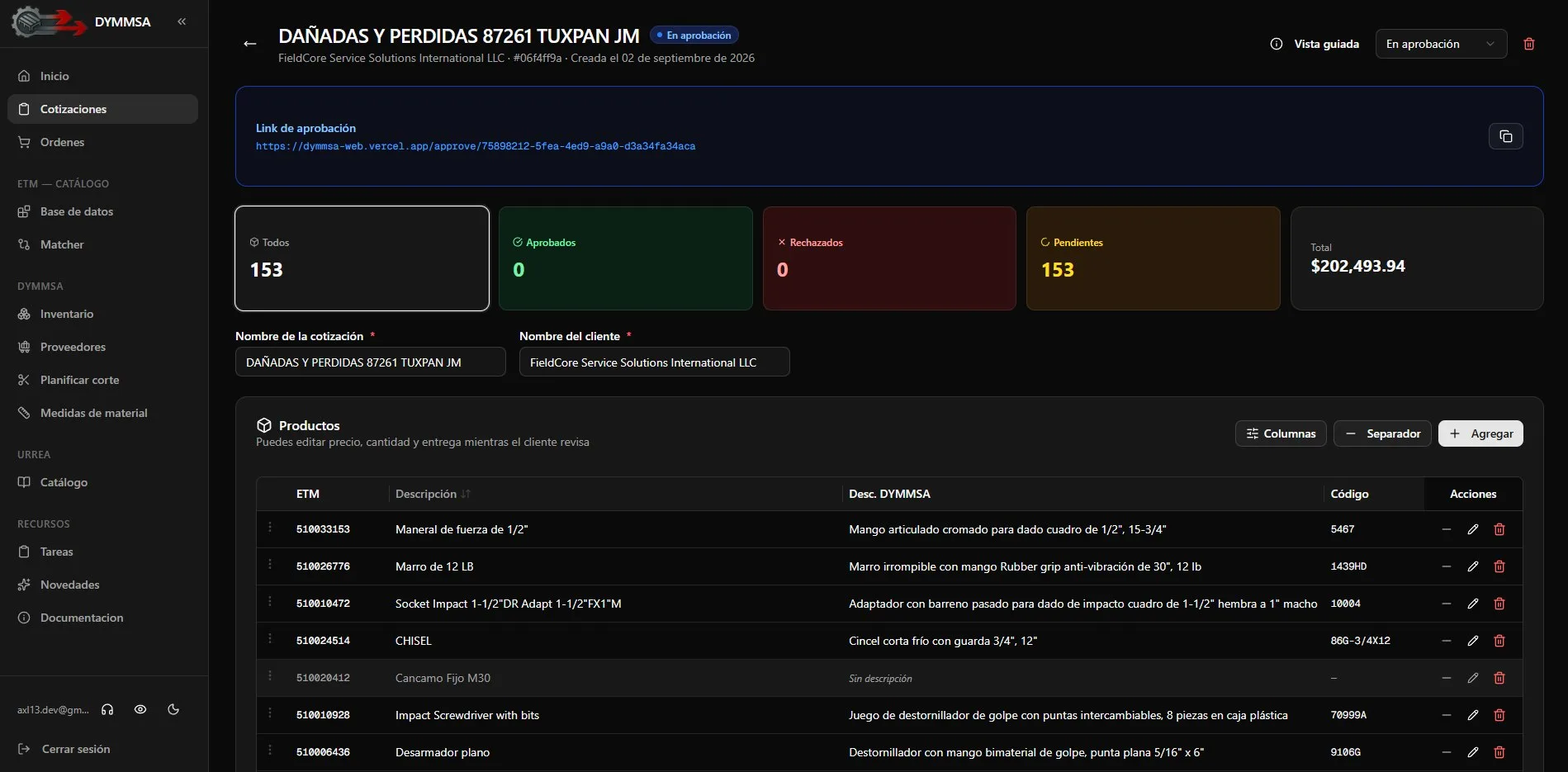
The brief
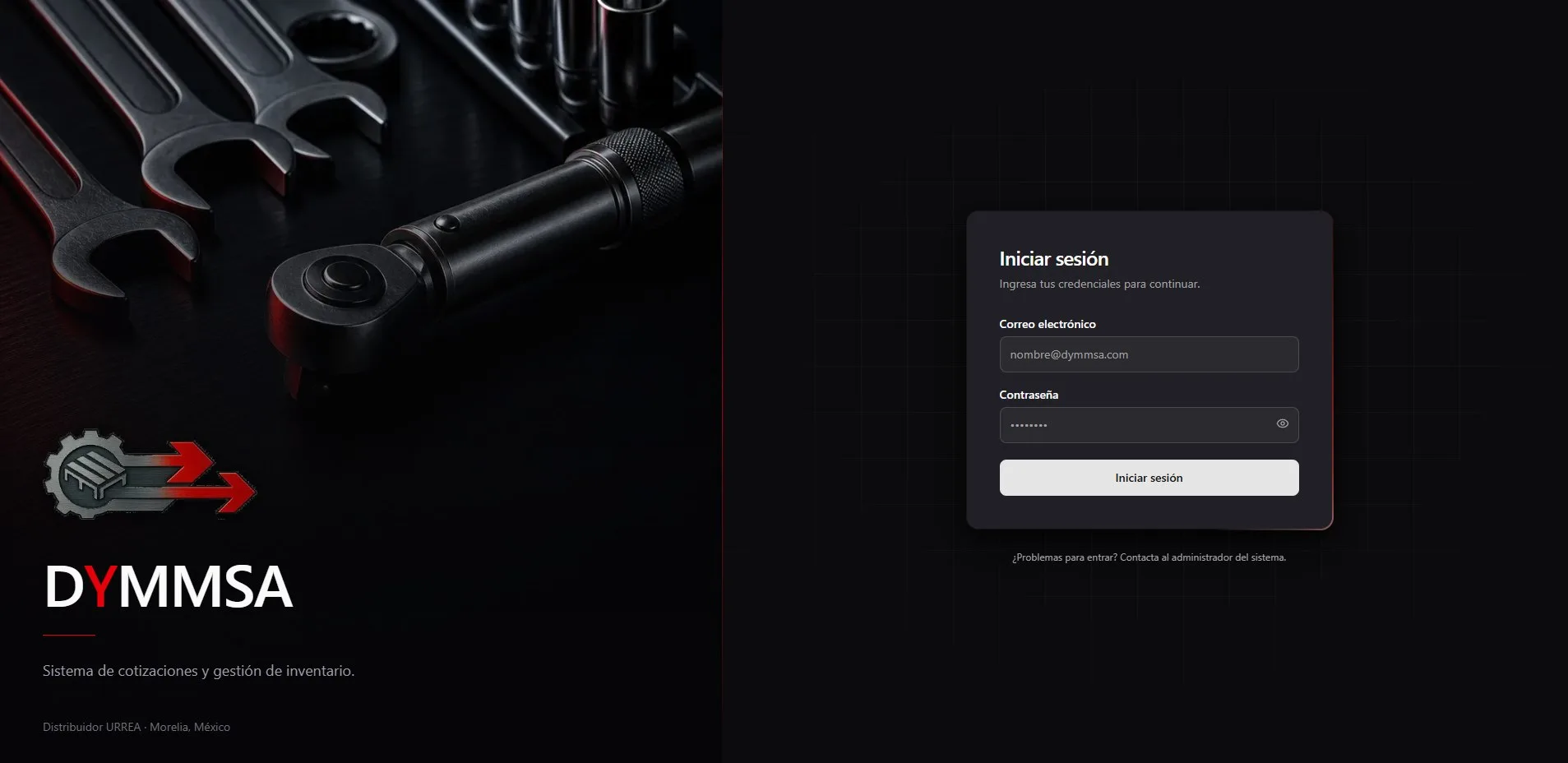
DYMMSA is an authorized URREA tool distributor in Morelia. Their customers sent Excel files full of product codes, and someone at the company sat down to look up every price, work out the totals, write the quote and then track the order by hand.
They hired me to automate that. Freelance work, on my own, no team.
The problem
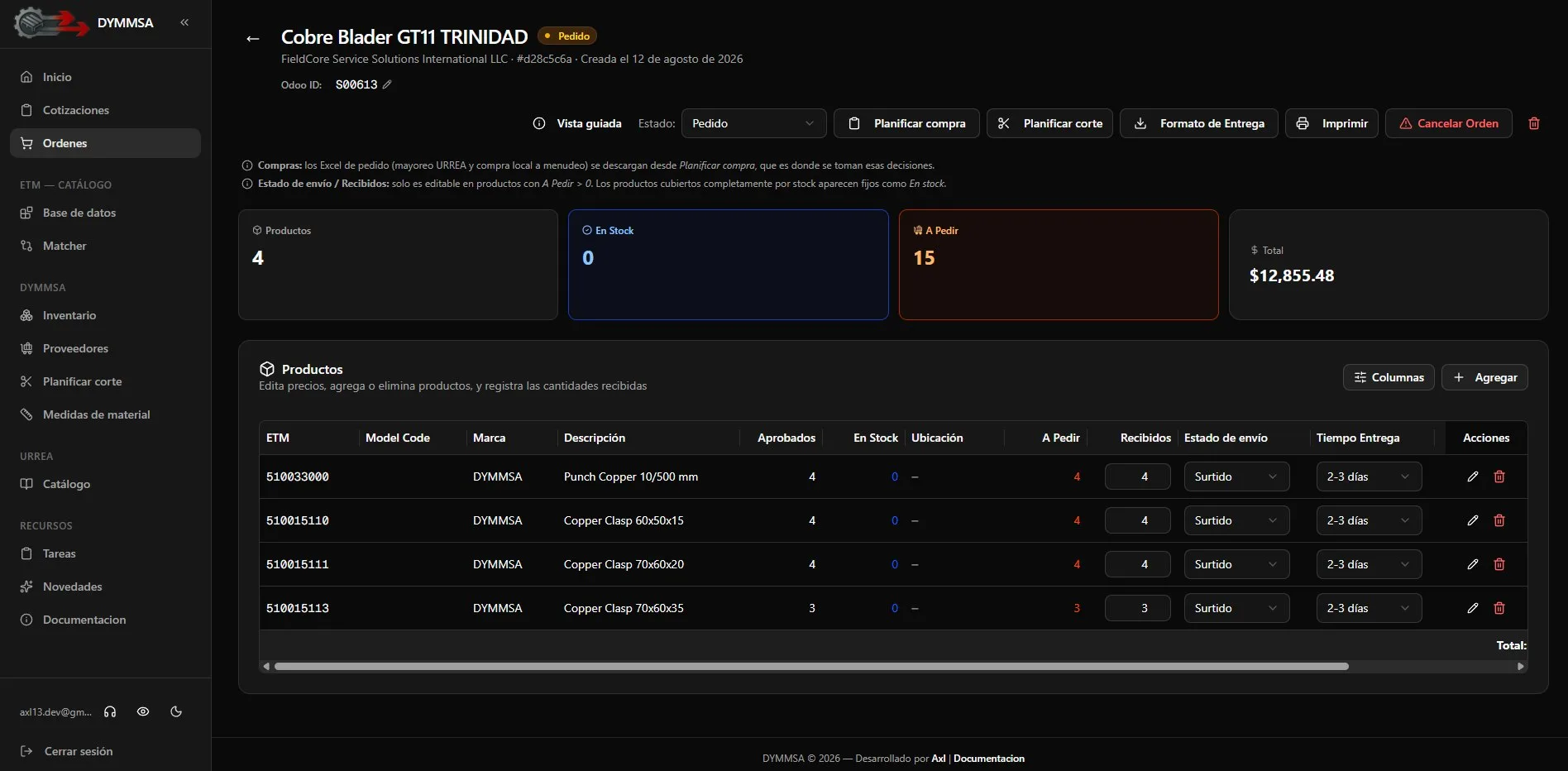
The obvious issue was slowness, but the real one was the lack of a trail: nobody could say where an order stood, what the customer had approved or what still had to be ordered from the supplier. Every mistake surfaced late.
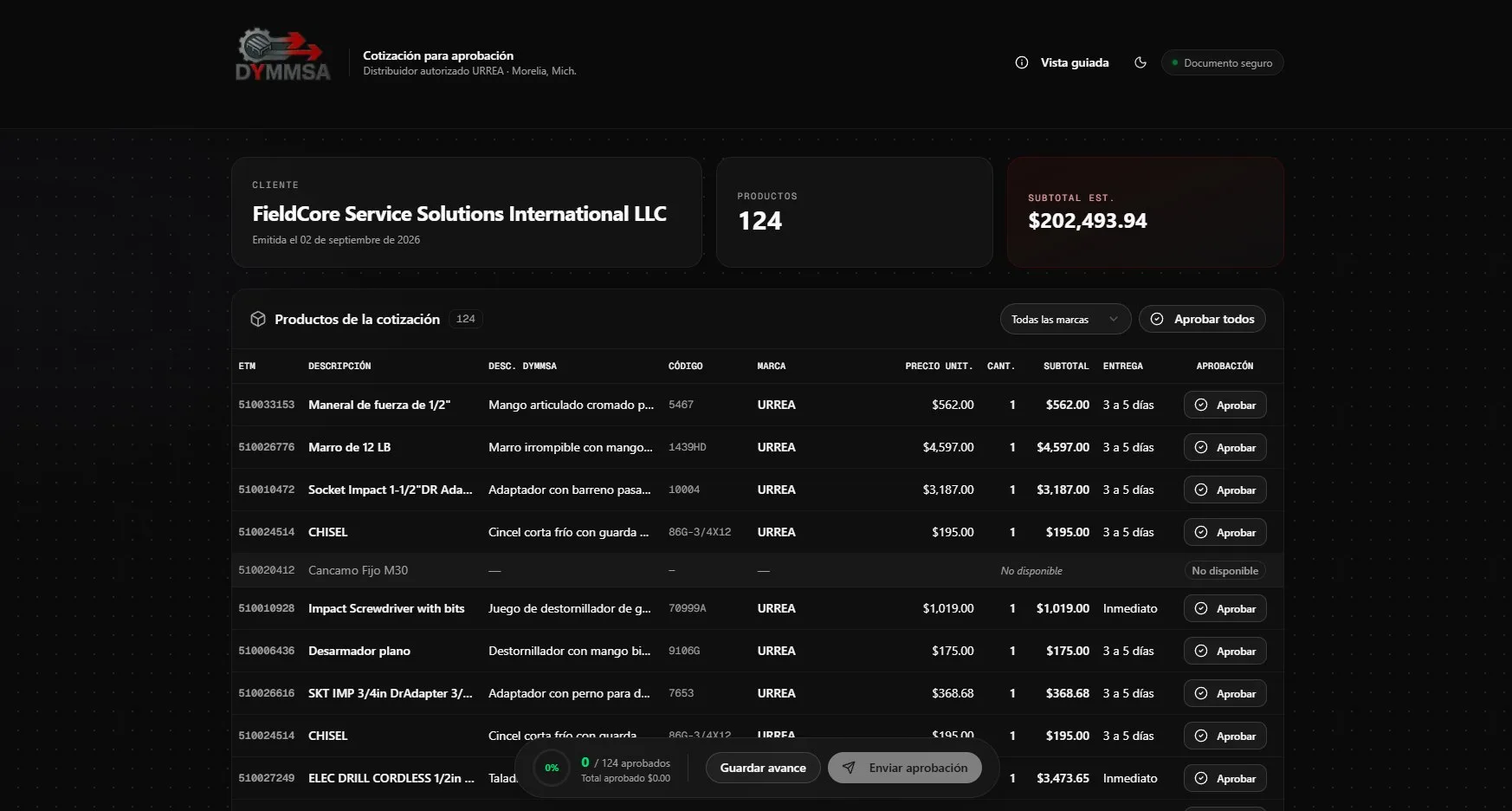
And there was a friction that was not technical at all: any system that forced the customer to create an account was going to die unused. The person who approves a quote does not want to sign up for anything.
The decision
I modelled the whole flow as a chain where every step leaves a record:
Customer's Excel → Quoting tool → Token approval → Sales order
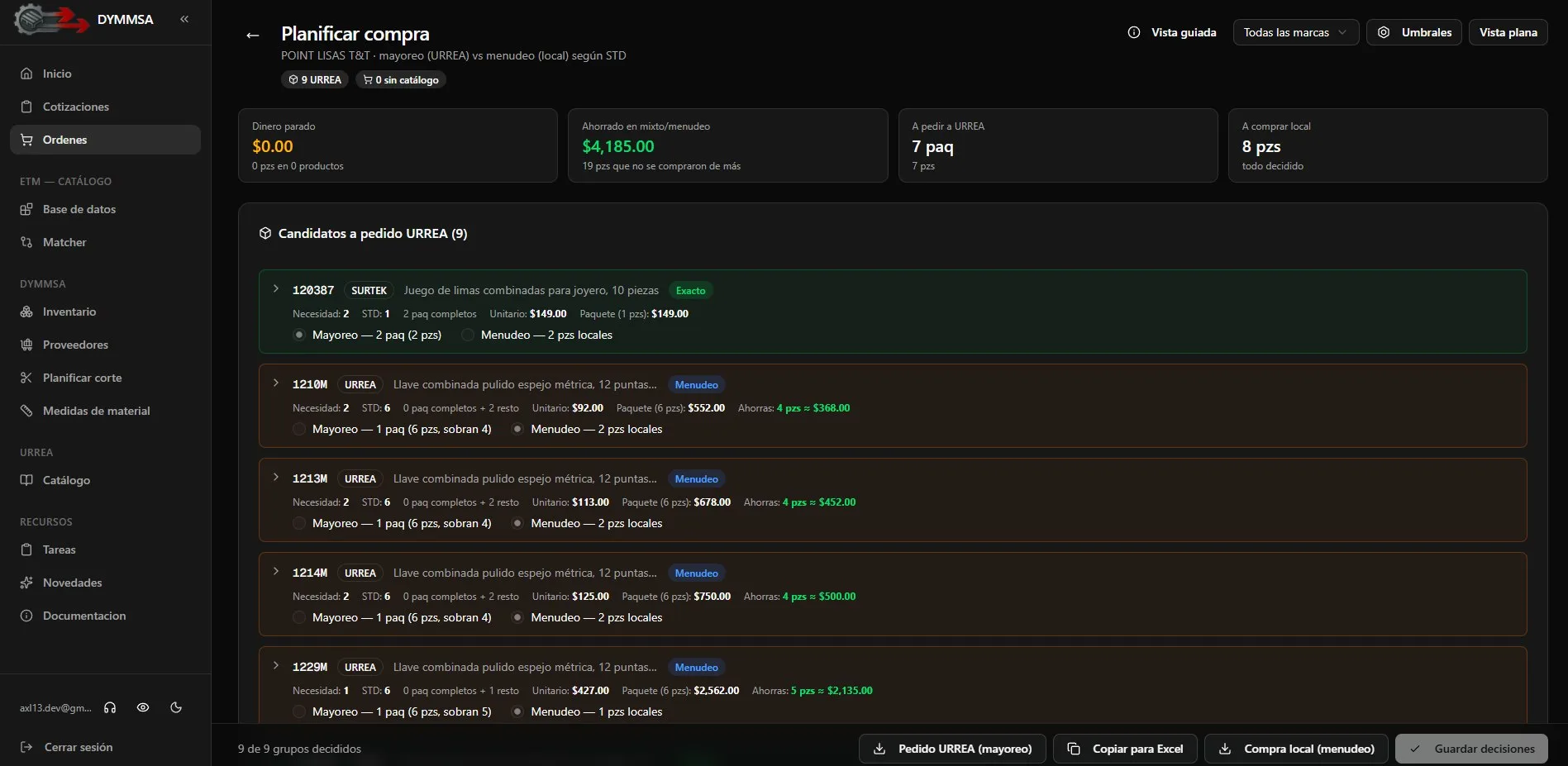
    → Purchase planner → Excel for URREA → Receiving → Inventory
Three decisions hold the system up. Approval goes through a public token: the customer gets a link, approves item by item and never registers anywhere — that removed the adoption friction at the root. The catalogue teaches itself: every product that goes through the quoting tool gets added, so the system grows more useful with normal use and no extra work for anyone. And nothing calls the database from the browser: everything goes through the app's own API routes, which gives a single place where authentication, errors and business rules live.
Later I added an MCP server on top of the application: the same routes and the same rules became available to AI agents, with Supabase's native OAuth 2.1. The caller's token builds its own client, so the access policies apply exactly as they do on the web — no privileged keys anywhere.
The result
The system is in active use and still growing: 556 commits as of August 2026, 14 tables in production and 47 API routes. Since the original cycle I have delivered six more modules — a multi-brand catalogue, a wholesale-versus-retail purchase planner, a cutting planner with an SVG diagram, suppliers, tasks on top of GitHub issues, and the MCP server.
A serious test base backs it: 81 test files across unit, component, integration and end-to-end tests against a local instance of the database.
But the lesson that marked me most was not technical. I had added a constraint so that a delivery could never exceed what was ordered, because it seemed obvious. It turned out to be false: the supplier sometimes ships more. Removing the constraint and modelling the surplus was the right answer, and it taught me to distrust the rules I take for granted without having watched them operate.