
The brief
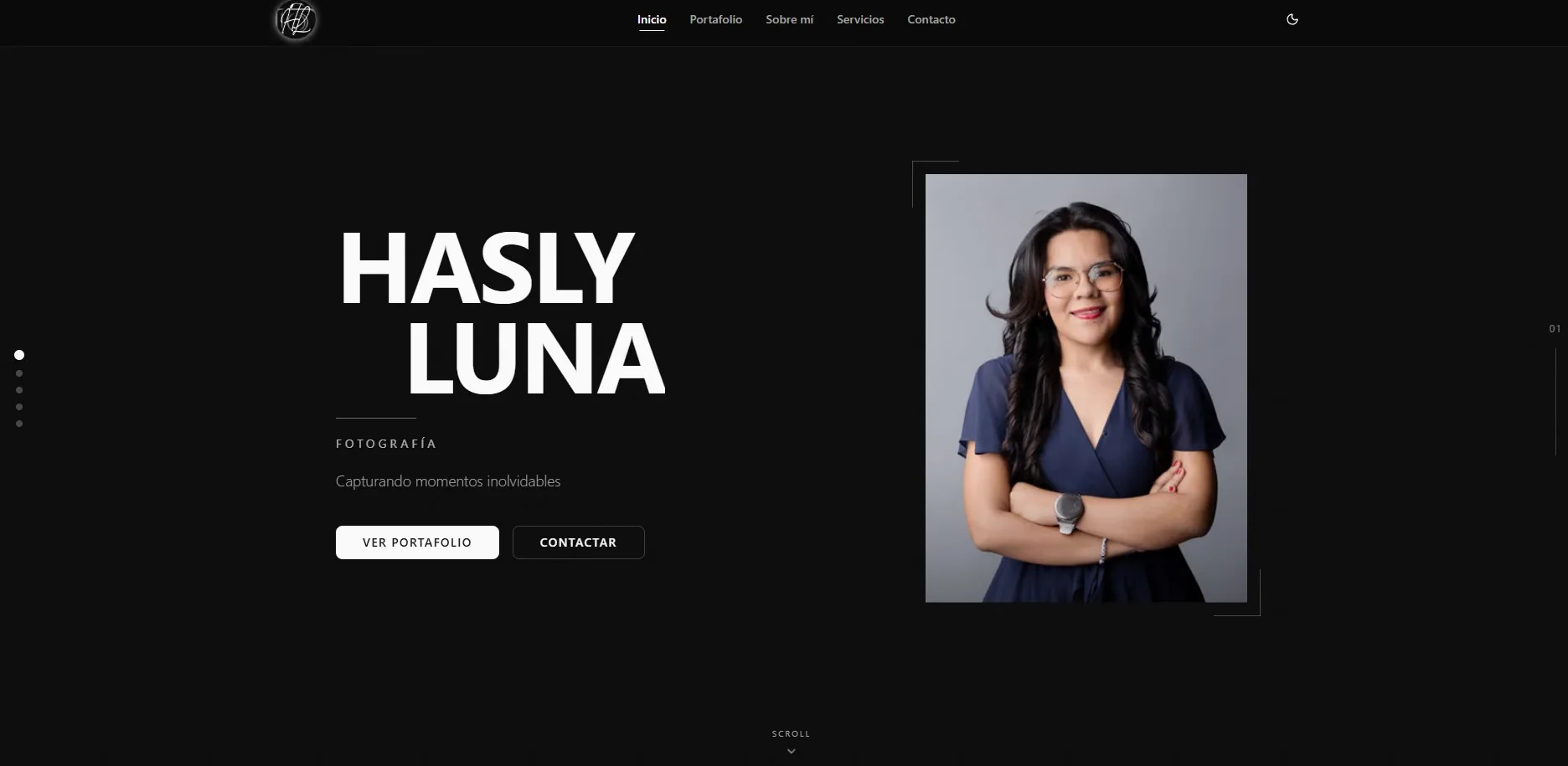
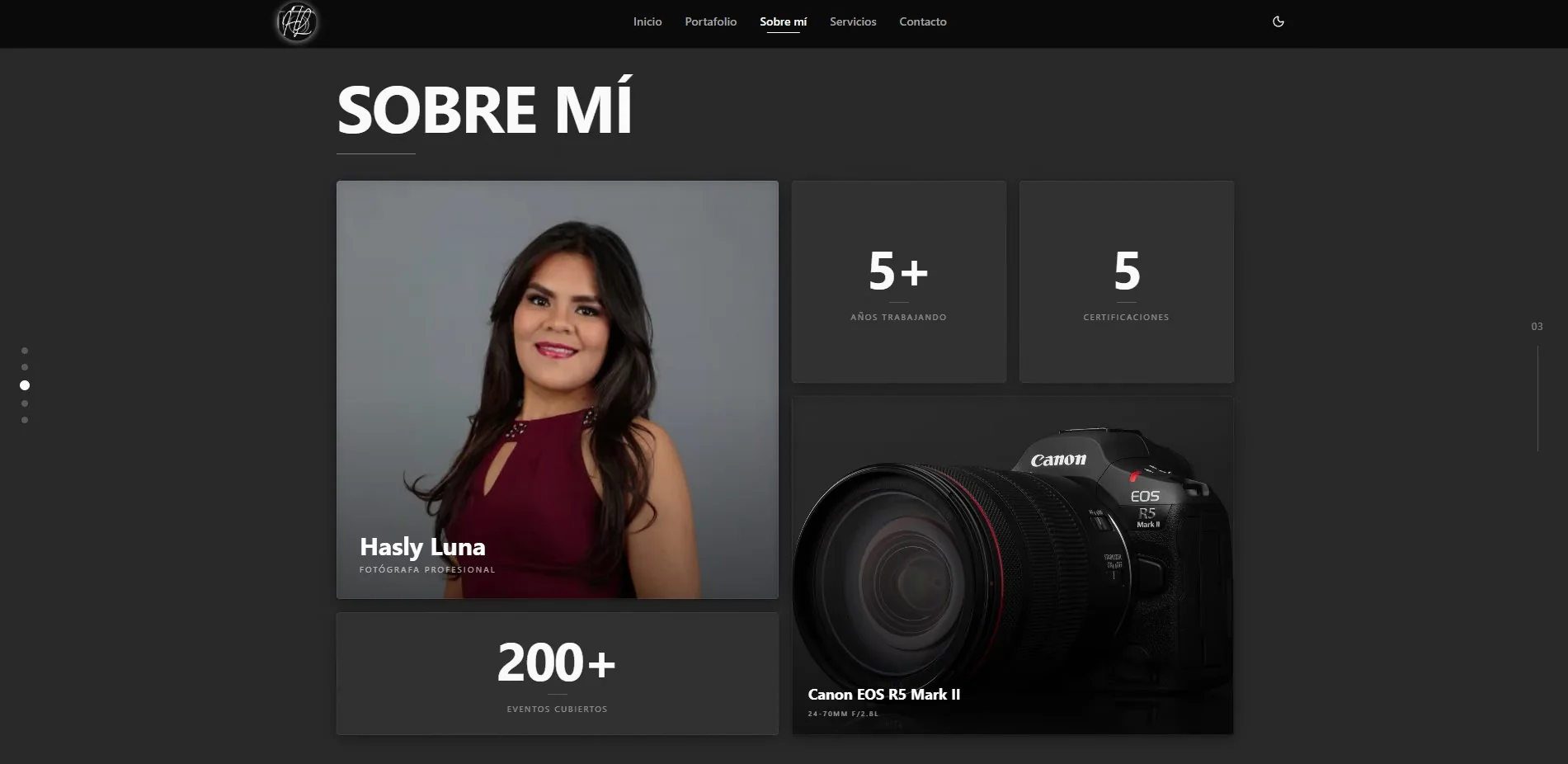
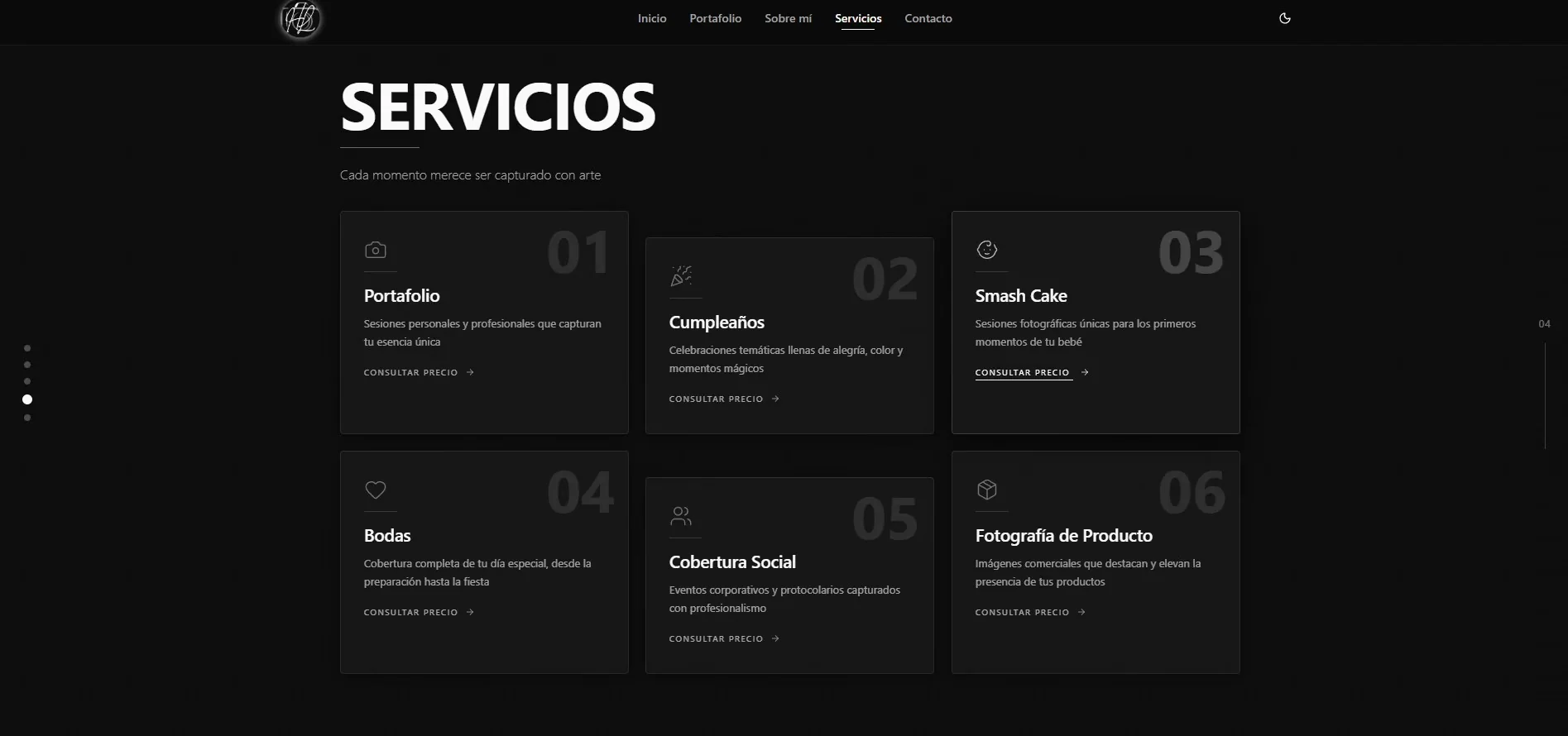
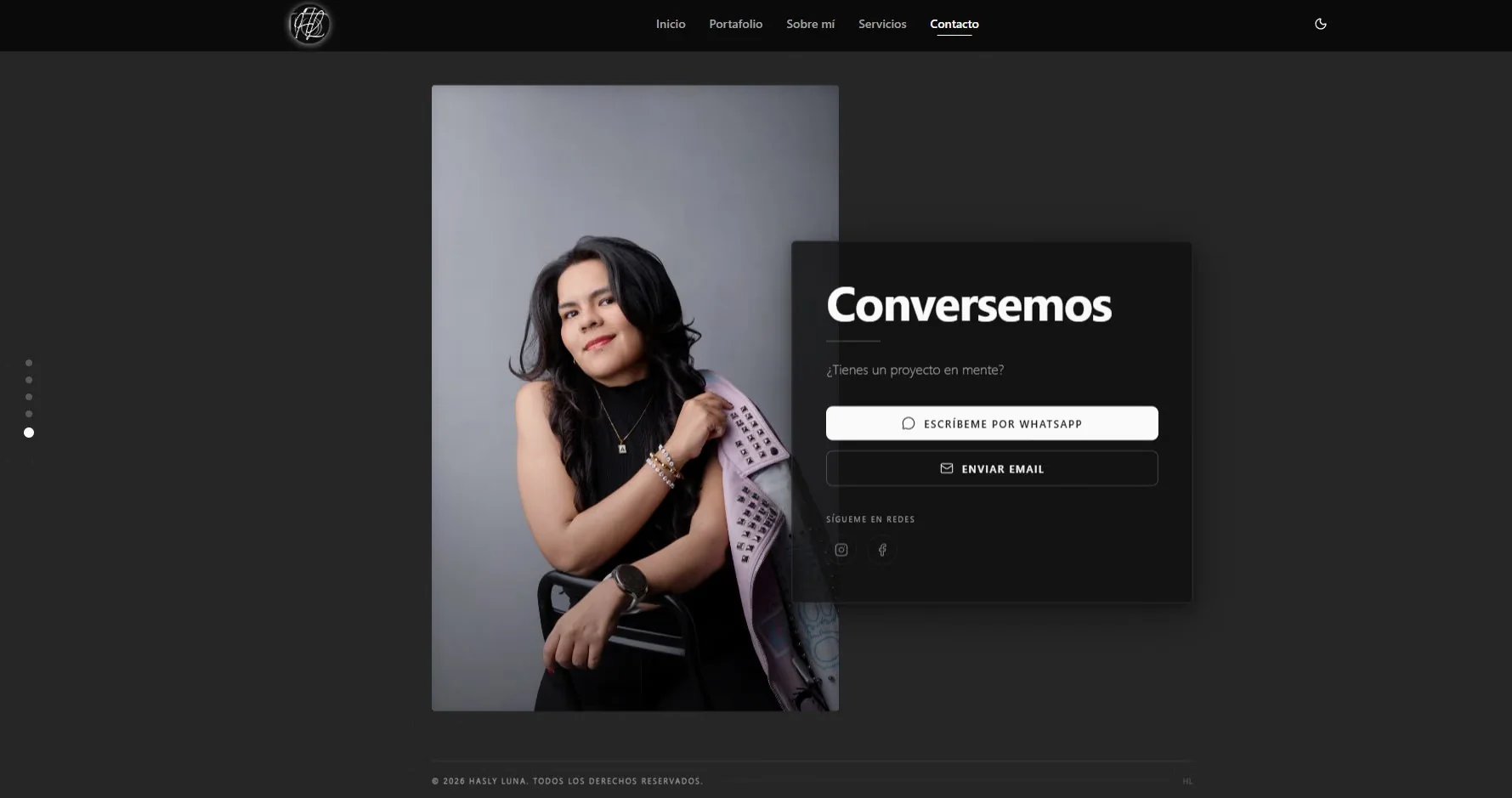
Hasly Luna is a professional photographer — sessions, weddings, events, product — and she is my sister. There was no client and no fee: I wanted to build her a real portfolio and, along the way, go deep into editorial design and animation, which was where I had the least craft.
The problem
A photography portfolio carries an uncomfortable tension: the more the interface shines, the less the photos do. Every design gesture that draws the eye is taking it away from the work that came to be shown.
At the same time, a photography site that browses like an ordinary website does not work either — it feels cheap next to the images.
The decision
A one hundred percent neutral palette, no brand colour. Not one. The hardest decision in the project and the best one: in a photography portfolio the colour has to come from the photos, and any interface accent competes with them.
So that navigation would feel considered without stealing the spotlight, I built a full-screen scrolling system by hand with GSAP Observer instead of reaching for a scroll library. Each section enters along a different vector — diagonal, horizontal, vertical — and that variation is what makes moving through the site feel alive rather than mechanical.
With eighty images in play, performance was part of the design: code split by section, modern formats and deferred loading, with the cover rendered on the server and the rest in separate chunks.
The result
In production at hasly.studio, scoring 90 on mobile and 99 on desktop in PageSpeed despite loading a gallery of eighty photos in seven categories, with filters and a full-screen view.
It also ships a complete discovery layer for AI agents — a content-negotiated
llms.txt, .well-known, WebMCP — that scores 83 out of 100 as an
agent-native site. It was my testbed for something I believe is about to stop
being optional.
Two lessons I carried into everything since. GSAP Observer over smooth-scroll
libraries: more control, one dependency fewer and a natural fit with the rest
of the animation ecosystem. And that prefers-reduced-motion is designed in
from the start, not patched in at the end — on a site that moves this much,
adding it later would have meant rebuilding it.